
Introduction
DOOH and social media integration is changing how brands build trust and drive conversions. When customers see a brand on digital screens and then again on their social feeds, familiarity grows. That familiarity influences buying decisions. Over time, repeated exposure creates confidence.
Today, attention is fragmented. However, familiarity still wins. Digital OOH advertising combined with social media campaigns creates a strong loop of visibility. People first see the brand in real spaces. Then they interact with it online. That combination increases recall and action.
In this article, we explore the psychology behind familiarity, why repeated exposure works, and how integrated campaigns outperform single-channel strategies.
What Is DOOH and Social Media Integration?
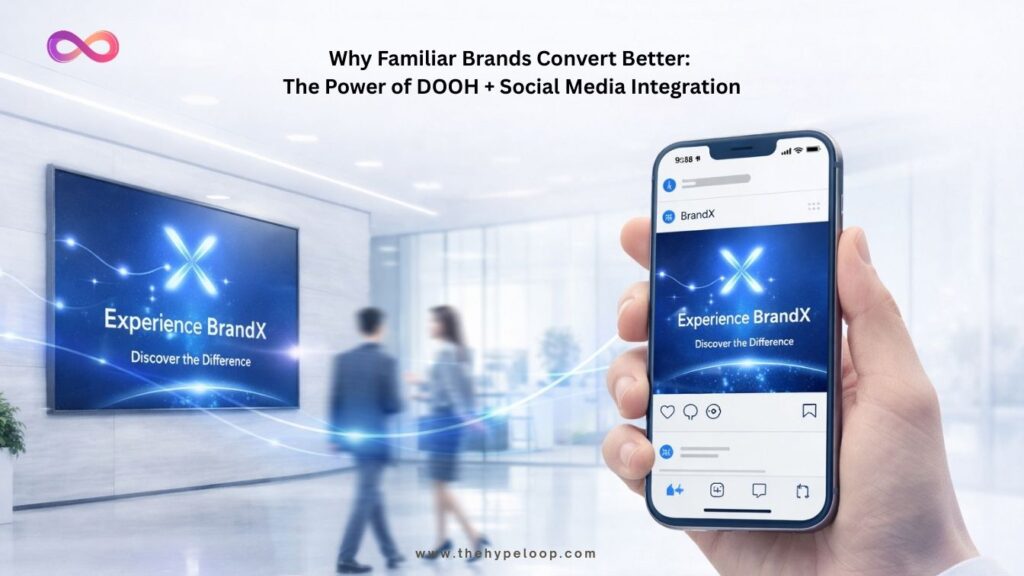
DOOH and social media integration refers to running coordinated campaigns across digital out-of-home advertising and online platforms. Instead of working separately, both channels reinforce each other.
For example:
- A brand runs digital screen advertising in corporate offices.
- Employees see the brand daily.
- Later, the same brand appears in their Instagram or LinkedIn feed.
Because the message repeats across environments, trust builds faster.
Moreover, digital OOH advertising adds physical credibility. Social media adds interaction. Together, they close the loop between awareness and action.
Why Familiar Brands Convert Better: The Psychology Behind It
Humans prefer what feels familiar. This effect is known as the “mere exposure effect.” The more people see something, the more they like it.
However, familiarity does not mean annoyance. Instead, it means consistent presence in trusted environments.
Repeated Exposure Reduces Risk
When customers see a brand multiple times, uncertainty drops. As a result, they feel safer making a purchase decision.
Familiarity Builds Memory
Memory drives choice. If your brand appears repeatedly in daily environments like offices or cafés, it stays top of mind.
Trust Forms Through Visibility
Visibility in physical spaces adds credibility. Therefore, DOOH advertising increases perceived legitimacy compared to online-only ads.
Because of these psychological factors, integrated campaigns outperform isolated efforts.
How DOOH and Social Media Integration Influences Buying Decisions
Buying decisions rarely happen instantly. Instead, customers move through stages.
- Awareness
- Consideration
- Trust
- Action
Digital out-of-home advertising creates awareness in real-world environments. Social media nurtures consideration and engagement.
For example:
A fitness brand runs hypeloop corporate space advertising inside office lobbies. Employees notice the offer daily. Later, they see a retargeted Instagram ad. Since they recognize the brand, they click.
Without that familiarity, the click might not happen.
Why Single-Channel Campaigns Underperform
Many businesses rely only on paid social ads. However, social media alone often struggles with trust.
Online ads face:
- Scroll fatigue
- Ad blindness
- Skepticism
- High competition
On the other hand, digital screen advertising operates in high-attention zones. People cannot scroll past it.
Therefore, when both channels work together, performance improves.
Repeated real-world visibility supports digital engagement. Digital engagement drives measurable action.
Real-World Trust + Digital Action
Trust forms offline. Action often happens online.
This is why DOOH and social media integration works so well.
Imagine a retail brand using chennai office advertising in IT corridors. Professionals see the brand during work hours. Later, they encounter a sponsored LinkedIn post.
Since recognition already exists, engagement increases.
Moreover, the brand appears larger and more established. Perceived scale influences trust.
Where Integrated Campaigns Work Best
Certain environments amplify familiarity.
Corporate Spaces
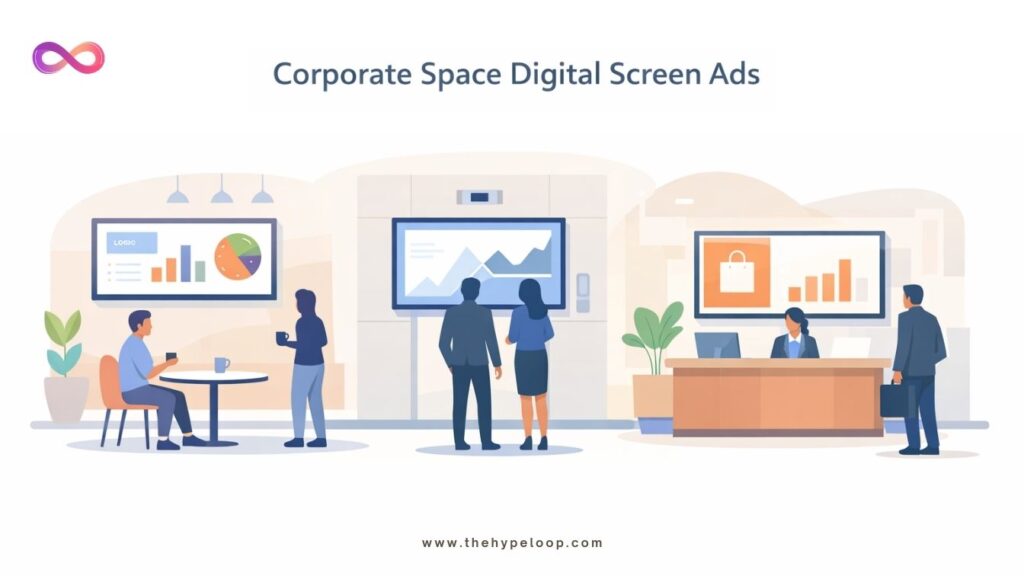
Hypeloop corporate space advertising targets working professionals. High dwell time increases recall.
Retail Malls
Shoppers see brand messages before making purchase decisions.
Cafés and Restaurants
These locations support lifestyle positioning.
Residential Apartments
Local services gain neighborhood trust.
By combining these with social media retargeting, brands strengthen conversion paths.
Measuring the Impact of DOOH and Social Media Integration
Integrated campaigns must be measurable.
Key metrics include:
- Increased branded search volume
- Higher click-through rates
- Lower cost per acquisition
- Improved conversion rate
When familiarity increases, performance metrics improve.
Additionally, coupon codes or QR codes on digital screens connect offline exposure to online action.
Because both channels align, attribution becomes clearer.
Why Familiarity Matters More in Competitive Markets
In crowded markets, customers face endless choices. Therefore, brands that appear familiar gain advantage.
For example, in Chennai’s dense retail environment, repeated digital OOH advertising builds presence. When combined with social ads, the brand dominates local perception.
Familiar brands feel safer. Safe brands convert better.
How Hype Loop Enables Smart Integration
Hype Loop simplifies DOOH and social media integration for advertisers.
With Hype Loop:
- Select targeted digital screens
- Focus on high-attention corporate locations
- Launch hyperlocal campaigns
- Pair with social retargeting
Because campaigns run in real-world environments, digital ads gain credibility.
Moreover, Hype Loop supports chennai office advertising for businesses targeting working professionals.
You do not need massive budgets. Instead, you need strategic repetition.
Common Mistakes to Avoid
Even integrated campaigns can fail if poorly executed.
Avoid these errors:
- Inconsistent messaging across channels
- Weak call-to-action
- Running campaigns too briefly
- Ignoring frequency
Instead, maintain consistent visuals. Repeat key offers. Align creative tone.
Consistency builds familiarity. Familiarity builds conversions.
Future of Integrated Advertising
Advertising is shifting toward omnichannel strategies.
Digital out-of-home advertising continues to grow. Meanwhile, social media platforms evolve rapidly.
Brands that connect both channels will outperform those relying on one.
In the future, AI-driven targeting will optimize DOOH and social media integration even further.
Early adopters will gain long-term advantage.
Final Thoughts: Why You Should Start Now
DOOH and social media integration is not just a marketing tactic. It is a trust-building strategy.
When customers see your brand in real environments and online spaces, recognition strengthens. Over time, trust grows. Trust drives action.
If you want better conversions, stop relying on single-channel campaigns.
Instead, build familiarity across digital OOH advertising and social platforms.
Start Building Familiarity Today
- Register on Hype Loop.
- Choose high-attention corporate or retail screens.
- Align your social campaigns.
Let customers see you more than once.
Because familiar brands convert better.