
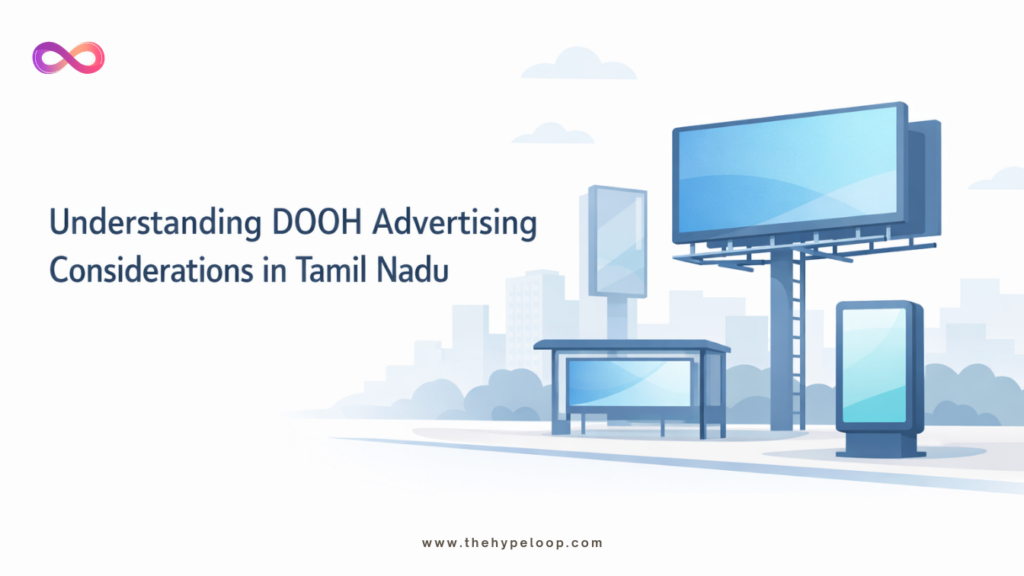
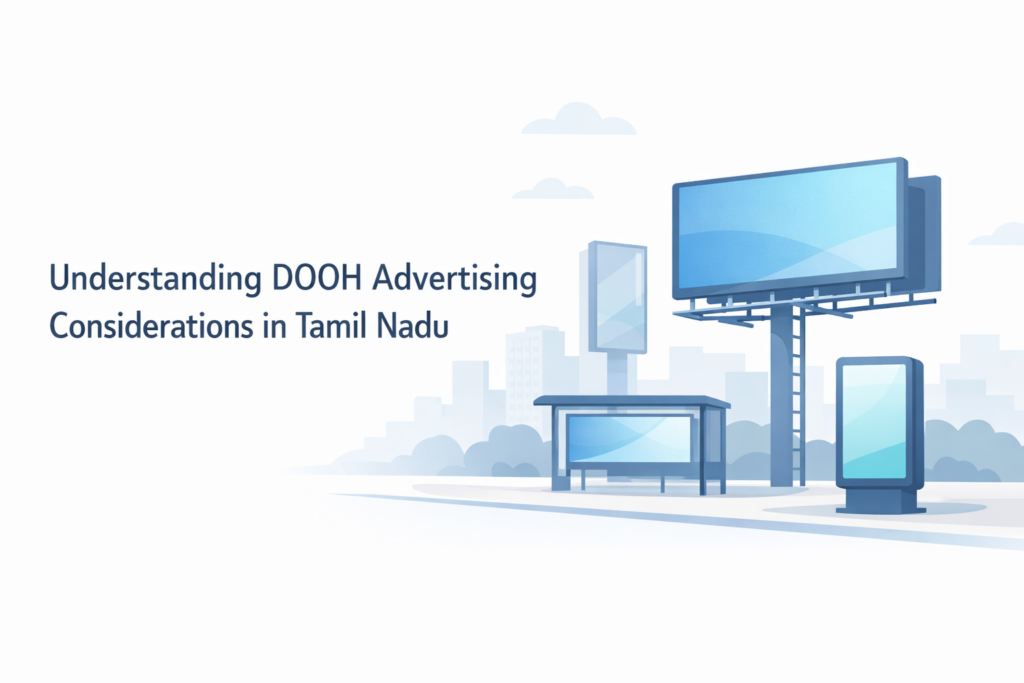
Digital Out-of-Home (DOOH) advertising is growing as brands move beyond personal screens and into everyday environments. Today, brands appear in residential communities, commercial spaces, and semi-public locations where people naturally spend time. As a result, DOOH helps brands connect with audiences in a contextual and non-intrusive manner.
However, unlike purely digital formats, DOOH operates in the physical world. Therefore, brands often consider location, setting, and timing before launching a campaign. These factors can vary widely based on where the screen appears and who sees the message.
This article offers a general, high-level view of how brands think about DOOH advertising in Tamil Nadu. It focuses on awareness and preparation, without discussing legal or regulatory specifics.
Why Context Matters in DOOH Advertising
DOOH exists in shared spaces. Because of this, context plays a critical role in how people perceive a brand’s message.
For example, brands often consider:
- The type of location, such as private, semi-private, or public-facing spaces
- The audience that typically occupies that environment
- Overall public sensibilities and brand safety expectations
Therefore, effective DOOH campaigns focus on relevance and tone. Instead of chasing reach alone, brands plan messaging that fits naturally into the surrounding environment.
A High-Level View of Approvals and Coordination
In real-world settings, DOOH advertising usually involves coordination among multiple stakeholders. Depending on the placement, this coordination may include:
- Property owners or facility managers
- Venue or location partners
- DOOH platform partners managing screen networks
Moreover, approaches often differ based on factors such as:
- Indoor versus outdoor screens
- Visibility within or beyond the premises
- The nature of the venue and its audience
Because of these differences, many brands prefer platforms that handle these operational aspects as part of their network management.
Content Sensitivity in Shared Environments
Since DOOH messages appear in common spaces, brands usually apply extra care to their creatives.
In most cases, brands focus on:
- Keeping communication respectful and inclusive
- Avoiding exaggerated, misleading, or sensitive claims
- Staying mindful of cultural and regional context
- Aligning creatives with widely accepted advertising standards
As a result, campaigns feel consistent, trustworthy, and suitable for long-term brand building.
Timing and External Influences
Timing also affects how people receive DOOH messages. Seasonal periods, public events, or heightened public attention can shape audience perception.
Therefore, brands often:
- Review messaging more carefully during sensitive periods
- Adjust creative tone to suit the context
- Emphasize brand-building over aggressive promotion
This approach helps campaigns remain appropriate across different environments and moments.
A Simple Readiness Checklist for Brands
Before launching a DOOH campaign, brands typically ask a few key questions:
✔ Does the placement align with the brand’s audience and values?
✔ Is the creative suitable for a shared, real-world environment?
✔ Is the message clear, respectful, and context-aware?
✔ Is a trusted DOOH partner managing execution?
Answering these questions early helps reduce complexity and ensures smoother execution.
How DOOH Platforms Support Execution
Many modern DOOH platforms simplify execution by managing:
- Screen networks across verified locations
- Creative review and scheduling processes
- Ongoing coordination and monitoring
As a result, brands can focus more on storytelling and impact rather than operational details.
At Hype Loop, the emphasis remains on helping brands build meaningful presence in everyday spaces through thoughtfully curated screen environments and simplified campaign execution.
Final Note
DOOH advertising works best when brands approach it with clarity, sensitivity, and long-term thinking. While considerations may differ by location, brands that prioritize context and partnership often scale more confidently and responsibly.
This article is intended for general informational purposes only and does not constitute legal or regulatory advice.